Applications and venues

Electro-Voice systems for rooms where coverage is the contract

Different venues ask different questions of the same loudspeaker family: throw, articulation, stage spill, low-frequency control, sightline protection, and how fast crews can recover when the schedule changes.

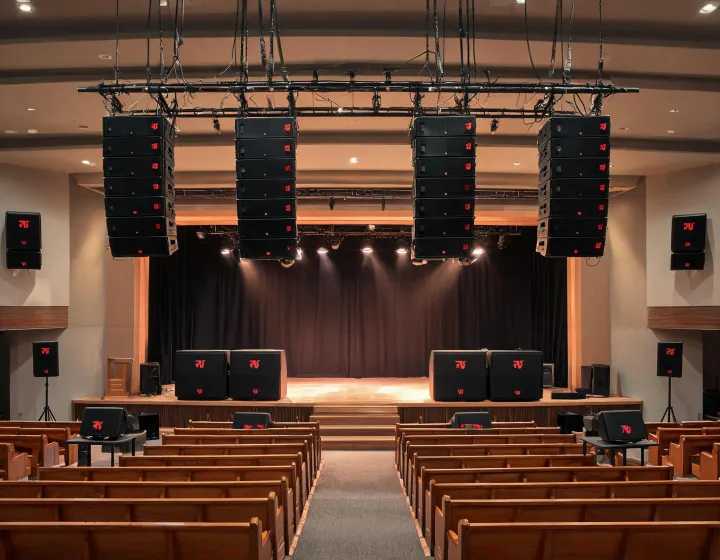
Professional venue audio system with Electro-Voice style loudspeakers
Horizontal application stories

Match the system conversation to the venue pressure

Live touring

Arrays that travel with the show file

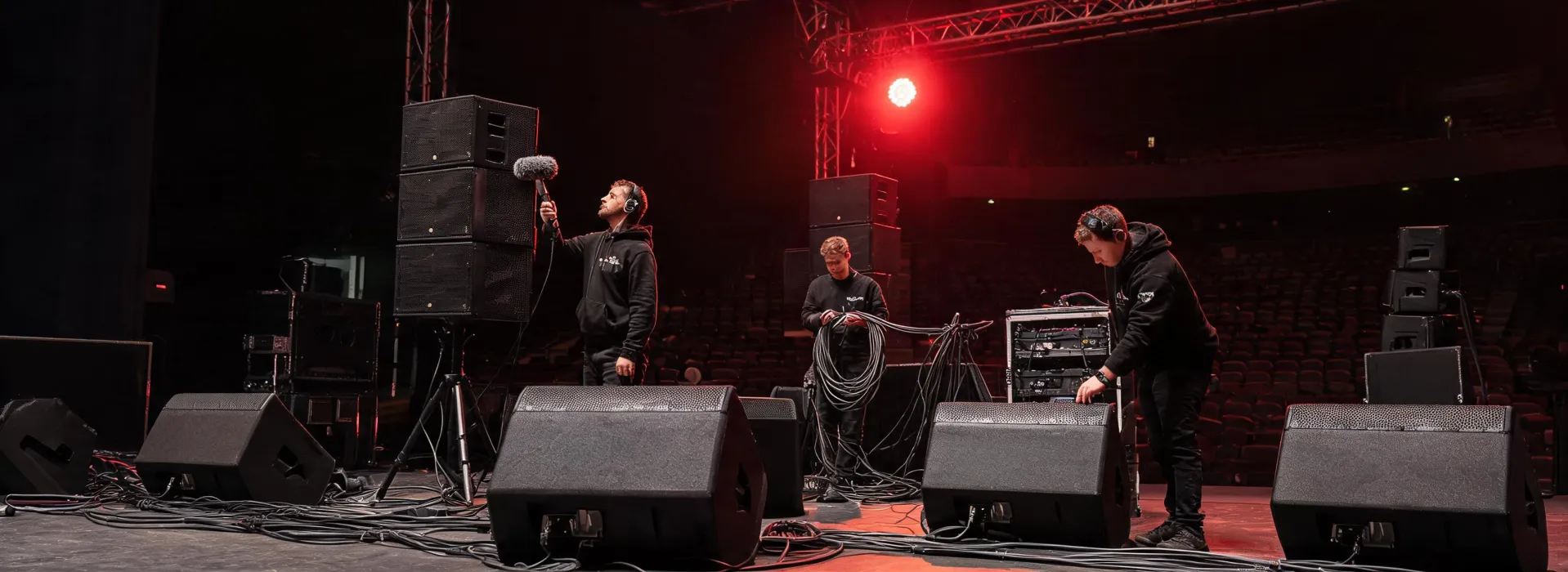
Touring teams care about repeatability: predictable hangs, quick trim changes, monitor positions that survive a rushed changeover, and low-frequency packages that translate from one outdoor stage to the next. Electro-Voice product discussions for this application focus on pack size, rigging speed, coverage maps, and whether the system can scale without changing the crew vocabulary every night.
Worship and performance rooms

Speech, music, and volunteer operation

Houses of worship often need spoken word to remain intelligible while music carries emotional weight. That mix places pressure on loudspeaker directivity, stage monitor discipline, fill timing, and simple operating states. The buying conversation usually includes balcony coverage, choir positions, livestream feeds, and how quickly a volunteer team can understand normal and event-day presets.

Cinema and immersive rooms

Impact without masking dialogue

Cinema-oriented projects use subwoofer energy, screen-channel clarity, and distributed surround coverage to create impact while protecting dialogue. Even when the final design is handled by a specialist integrator, early content has to distinguish low-frequency extension from uncontrolled boom. That is where system notes around enclosure placement, coverage zones, and service access become useful.

Corporate conference

Clean speech reinforcement in visible spaces

Boardrooms, training centers, and auditoriums need audio that feels invisible until it fails. Compact loudspeakers, discreet fills, presenter monitors, DSP zones, and microphone behavior all connect. Electro-Voice application language for this sector avoids entertainment-only assumptions and instead centers conference clarity, camera sightlines, hybrid meetings, and facility support.

Selection considerations

The audio trade-offs an Electro-Voice brief is meant to surface, not hide

Every venue forces a choice between two valid engineering answers. The point of an early system conversation is to name which compromise the room can live with before hardware is ordered, not after.

Line array vs. point source

A vertical array holds level from front rows to a deep balcony and keeps reflections off the ceiling, but it costs rigging time, flying points, and tuning effort. A point-source box deploys in minutes and reads cleanly in a short or wide room, yet level falls off faster with distance. Deep rooms and long throws lean array; shallow, wide, or fast-turn rooms often stay better served by well-aimed point source.

Sealed vs. ported subwoofers

A ported (bass-reflex) sub returns more output per watt around its tuning frequency, which suits dance and program impact. A sealed enclosure gives tighter transient control and more graceful low-end roll-off, which cinema dialogue and acoustic music often prefer. The honest answer is program-dependent: chasing maximum SPL and chasing low-frequency accuracy are not the same target.

Powered vs. passive boxes

Self-powered enclosures fold amplification, DSP, and protection into the cabinet, shorten portable setup, and remove amp-rack guesswork. Passive systems keep amplifiers central, which can be easier to service and re-voice across a large fixed install. The split is rarely about quality; it is about who maintains the rig and how often it moves.

Where the physics pushes back

Limits we name early so a venue is not surprised on show day

Continuous SPL has a thermal ceiling

Rated peak output is not the level a system holds for a three-hour event. Voice coils heat under sustained drive, which produces power compression and a few decibels of real loss. Long programs are planned with headroom and box count, not by reading the highest number on a datasheet.

Coverage angle is fixed by the box, not by EQ

A waveguide defines horizontal and vertical dispersion mechanically. Equalisation can shape tonal balance, but it cannot send energy where the pattern does not reach. Seats outside the coverage map need fills or a different enclosure, not more gain.

Outdoor and humid rooms change the math

Open air gives no reflective reinforcement, so distant coverage costs more boxes and power. High humidity and temperature swings shift high-frequency air absorption and rigging behavior, which is why weather-aware placement is part of the brief rather than an afterthought.

Field reliability depends on maintenance access

Flown arrays, distributed fills, and ground-stacked subs all need a service path. A design that ignores cable runs, rigging inspection, and replaceable components looks clean on paper and becomes expensive the first time a driver or amp module has to come down.

Case patterns

Three recurring upgrades behind professional audio projects

Audio crew preparing Electro-Voice loudspeaker system for venue use

Put the Electro-Voice application into a practical brief

Tell us whether the system is touring, installed, portable, cinema-focused, or conference-driven. The right starting point depends on the room and the operator, not only the model name.

Map My Application